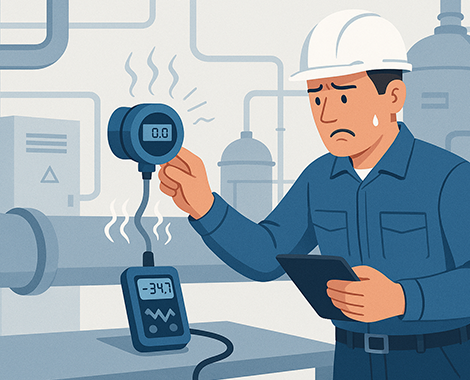
1. Customer Pain Points: Why Temperature Sensing Still Fails in Real Applications
Across industries, engineers consistently report three core challenges:
1.1 Inaccurate Measurements Under Dynamic Conditions
Many sensors perform well in controlled labs but fail when exposed to:
· Fast temperature fluctuations
· Airflow disturbances
· Thermal gradients inside tight enclosures
· Heat sources from PCBs or batteries
Impact: Incorrect thermal feedback → reduced performance, overheating, early aging.
1.2 Long-Term Drift and Poor Reliability
Devices deployed in real environments face:
· High humidity
· Continuous thermal cycling
· Mechanical stress
· Oxidation or aging of sensing elements
Impact: Gradual accuracy loss → unpredictable system behavior.
1.3 Slow Response Time
In systems like battery packs, LED modules, motors or HVAC, slow reaction means:
· Delayed protection
· Reduced efficiency
· Increased energy consumption
2. Technical Solutions: How Modern Temperature Sensors Solve These Challenges
2.1 MEMS-Enhanced Thermal Structures for Fast, Stable Response
Next-generation temperature sensors use miniaturized MEMS structures with:
· High surface-to-mass ratio
· Optimized heat conduction paths
· Low thermal inertia
Benefits:
· Faster response (<100 ms possible depending on design)
· More consistent readings under airflow or rapid temperature transitions
2.2 High-Precision NTC Thermistors for Tight Accuracy Control
High-stability NTC thermistors remain one of the most trusted solutions due to:
· Predictable resistance-temperature behavior
· High sensitivity in critical temperature ranges
· Excellent noise immunity
With advanced material engineering, modern NTC sensors achieve:
· ±0.1°C to ±0.3°C accuracy in key ranges
· Low drift over >10,000 hours
This makes them ideal for:
· Battery systems
· Consumer electronics
· HVAC
· Industrial controls
2.3 PCB & Mechanical Integration: Eliminating Error Sources
Even the best sensor will fail if integration is poor.
Modern engineering practices focus on:
· Separation from heat-generating components
· Thermal isolation structures
· Flexible lead designs to reduce mechanical stress
· Potting and encapsulation for humidity protection
These methods ensure stable, repeatable temperature readings across the entire product lifecycle.
2.4 Advanced Calibration and Multi-Point Compensation
To meet today’s accuracy expectations, sensors often require:
· Factory calibration at multiple temperature points
· Digital compensation algorithms
· Non-linear correction tailored to the application
This ensures:
· Higher accuracy across wide operating ranges (−40°C to +125°C)
· Reduced error from supply voltage, ADC precision, or PCB heating
3. Application-Driven Benefits: What Customers Ultimately Gain
✔ Improved product safety
Fast and accurate sensing prevents overheating in batteries, motors, power modules, and LED drivers.
✔ Longer product lifespan
Stable thermal control reduces component stress and premature failures.
✔ Higher energy efficiency
Accurate temperature data allows systems to optimize power usage dynamically.
✔ Reduced warranty costs
Stable long-term performance results in fewer field failures.
4. Reliability Evidence: How High-Quality Sensors Prove Their Performance
A sensor’s reliability is not marketing—it must be validated by testing.
Industry-leading sensors typically undergo:
4.1 Thermal Shock Testing
· −40°C to +150°C
· Hundreds to thousands of cycles
· Evaluates mechanical and material stability
4.2 High-Temperature Operating Life (HTOL)
Ensures semiconductor or NTC elements maintain accuracy over time.
4.3 Damp-Heat / Humidity Exposure (85°C / 85% RH)
Critical for:
· Home appliances
· Automotive cabin electronics
· Outdoor devices
4.4 Resistance Drift Testing
Measures long-term stability of sensing elements; premium NTC sensors exhibit extremely low drift.
4.5 Vibration & Mechanical Shock
Validates robustness for automotive and industrial use.
These reliability metrics form the trust foundation required by Google EEAT guidelines—especially when backed by real test data, certification, and engineering documentation.
5. Future Trends: Where Temperature Sensing Is Heading
Trend 1: Miniaturization with Higher Accuracy
MEMS-based temperature sensors will continue to shrink while improving precision and power efficiency.
Trend 2: Smart Integrated Sensors
Combining:
· Temperature sensing
· Data processing
· Diagnostics
into a single SiP (System-in-Package).
Trend 3: AI-Driven Thermal Monitoring
Systems will use predictive algorithms to:
· Reduce wear
· Optimize energy
· Prevent failures before they occur
Trend 4: Multi-Sensor Fusion
Combining temperature, humidity, and pressure sensors for comprehensive environmental monitoring.
Trend 5: Reliability-First Design
Customers increasingly demand long-term drift guarantees, pushing sensor manufacturers to strengthen materials and calibration methodologies.
Conclusion
As products become smaller, smarter, and more powerful, temperature control has become a foundational requirement. Modern sensors—especially high-precision NTC thermistors and MEMS-enhanced solutions—address customer pain points through accuracy, speed, reliability, and robust engineering design.
Manufacturers who prioritize EEAT principles—real engineering experience, proven expertise, authoritative testing methods, and transparent reliability data—will ultimately earn customer trust and leadership in the global sensing market.